



BE OPEN Foundation presents 38 selected solutions from the series of international SDG-focused design competitions for students and graduates it has organised since 2019. The selection of projects explores creative approaches to women and girls’ physical, mental and digital safety, access to support and justice, and the prevention of violence.
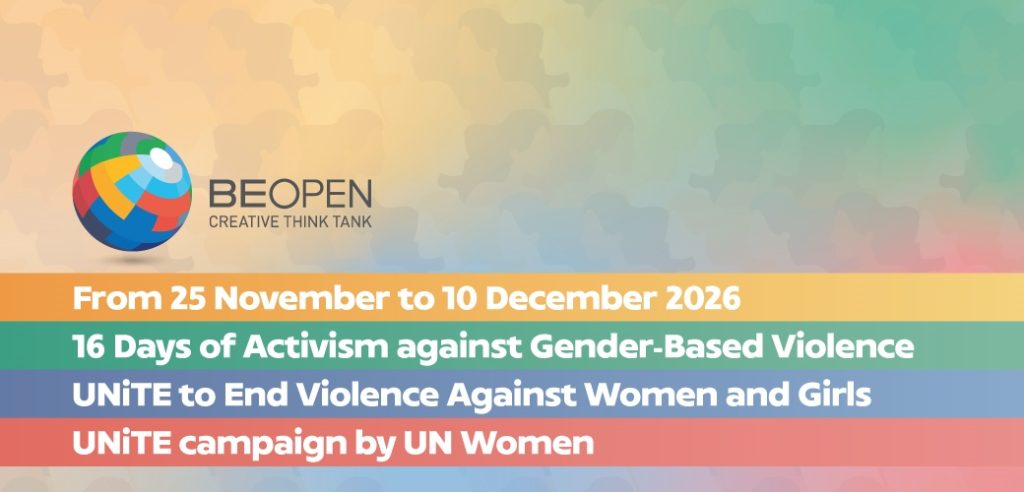
This is a respectful and independent contribution by BE OPEN in support of the 16 Days of Activism against Gender-Based Violence initiative. The campaign seeks public awareness and action with the hope to contribute to the prevention of gender-based violence, strengthening protection and making institutions more accountable.
BE OPEN’s special selection includes projects that help map online abuse, provide digital support, power women-led innovation; offer safe public transport options; tackle gender heuristics and gender stereotypes; provide discreet support and safety platform for women living under surveillance; teach safer cooking and heating, save proof of evidence for women’s unpaid labour, property and safety rights and much more.
By highlighting these student-led initiatives, BE OPEN hopes to underline the importance of open public dialogue, and involving younger people into not mere problem awareness, but active problem-solving, celebrating and rewarding those who offer tangible solutions.
The 16 Days of Activism against Gender-Based Violence is a global campaign led by the global civil society, launched at the inaugural Women’s Global Leadership Institute in 1991. Its annual dates connect 25 November, the International Day for the Elimination of Violence against Women, with 10 December, Human Rights Day, framing violence against women as a human rights issue.
The United Nations supports this movement through the Secretary-General’s UNiTE to End Violence against Women initiative, launched in 2008 and managed by UN Women. UNiTE encourages coordinated public advocacy, knowledge-sharing and action by governments, civil society, women’s organisations, young people, the private sector, media and UN entities.
The 2026 focus connects protection with access to effective support and justice. It includes physical and digital spaces and the barriers that prevent women and girls from reporting abuse or obtaining help. Digital harassment, stalking, image-based abuse and disinformation are part of this wider picture.