






Winners

First Prize

Redefining Global Healthcare by Ajisafe Damilola Ifeoluwa, University of Ilorin

Redefining Global Healthcare is a sustainable, technology-driven, and community-led approach that can help achieve healthcare-related goals while working within existing infrastructure, real economic constraints, and actual on-the-ground realities. It is a multi-phase, collaborative approach that involves telemedicine integration, health education, micro-health insurance schemes, and community health partnerships to improve the accessibility and functionality of primary healthcare services. Instead of building new primary healthcare centers (PHCs), the solution presumes revitalizing non-functional ones and integrating them into a low-cost, high-impact healthcare network, leveraging local pharmacies for NTD drug distribution, embedding AI-driven triage into PHCs and pharmacies to make existing health workers more effective, and introducing micro-health insurance models that allow communities to contribute what they can afford.
Second Prize #1
Ecovironment by Foday David Kamara, African Leadership University

Ecovironment is a social enterprise trans­forming Sierra Leone’s plastic pollution crisis into an opportunity for sustainable urban development and economic em­powerment. Founded in 2021, Ecoviron­ment addresses three critical challeng­es: urban waste management, climate resilience, and youth unemployment. The enterprise recycles plastic waste into durable, eco-friendly bricks and pav­ing tiles through chemical-free plastic extrusion technology. So far, Ecoviron­ment hasrecycled over 450 tons of plas­tic waste, produced over 78,000 units of construction materials, and provided green employment opportunities for over 20 underprivileged youth and women. Additionally, they have trained more than 200 individuals in plastic recycling and conducted educational outreach pro­grams that have engaged over 100,000 people. This multifaceted model address­es plastic pollution, creates economic opportunities, and fosters environmental stewardship in underserved communities.
Second Prize #2

AGASA: Algae for Sustainable Action by Adnan Hasyim Wibowo Universitas Indonesia
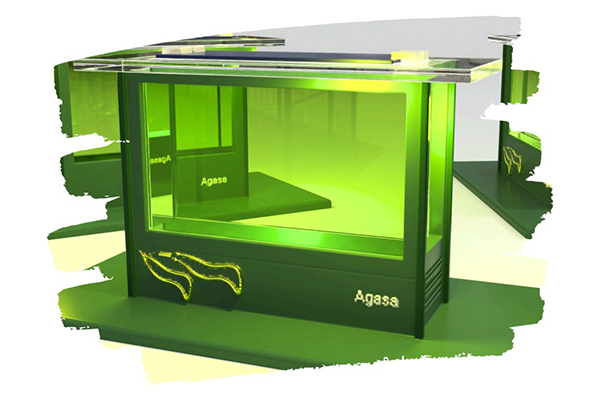
AGASA is a photobioreactor system engineered to address the challenges of urban decarbonization and energy transition by leveraging the high carbon sequestration capability of microalgae, which can absorb CO2 up to 50 times more efficiently than terrestrial plants while simultaneously producing oxygen and biomass for further utilization. AGASA is designed for high-emission zones, such as industrial complexes and congested urban centers. The photobioreactor utilizes glass installations to cultivate microalgae, which continuously perform photosynthesis, capturing carbon dioxide and releasing oxygen. The harvested algae biomass can be processed into biofuels, bioplastics, and other valuable bioproducts, contributing to a circular bioeconomy while reducing dependency on fossil-based materials. Integration with solar panels enables the system to generate renewable energy to power essential urban infrastructure such as street lighting, water pumps, and air purification units.

Public Vote Prize

CALMs: Computer Aided Learning Management Suite by Komborero Victor Kangai and Tinotenda Chrispen Makoni, High Achievers Coach International Academy.
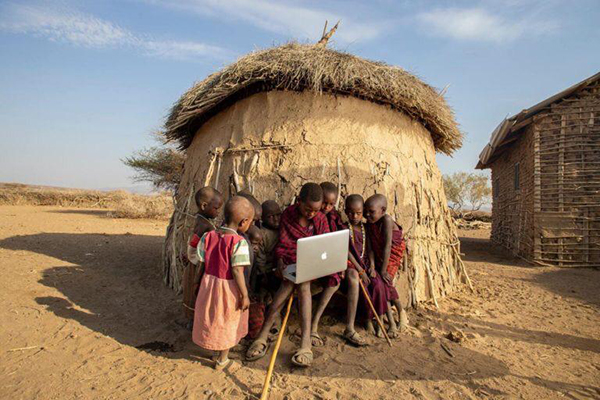
CALMS is an innovative e-learning platform designed to address the digital divide in Zimbabwe’s education system, particularly in rural and underserved areas where internet access is unreliable and costly. Zimbabwe has a low internet penetration rate of just 33%, with high data costs and poor network infrastructure, especially in rural areas The project leverages Television White Spaces (TVWS) technology to provide low-cost, stable connectivity and offline learning capabilities, ensuring continuous educational access even in low-network areas. CALMS integrates adaptive learning technologies, decentralized content management, and an analytics-driven results system to create a holistic and inclusive educational ecosystem. Key technological components include TVWS Base Stations & Customer Premises Equipment (CPEs) for reliable long-range connectivity.
Founder’s Choice Prize

Tera Mira, Working with Nature to Drive Meaningful Change in Stretch Textiles by Jeanne Begon-Lours and Lucy Dain-Williams, the Imperial College London
The initiative consists in developing a bio-based, biodegradable alternative to elastane, derived from the natural stretch properties of seaweed. The solution mimics elastane’s elasticity while eliminating fossil fuel dependence, toxicity, and microplastic pollution. This solution is sustainable: produced without land or fertilizers, minimizing environmental impact; non-toxic, biodegradable: fully decomposes in natural environments, preventing waste accumulation and compatible with existing textile production processes and upcoming regulations. The team is currently developing the prototype within Imperial College’s Undaunted Greenhouse program, leveraging a £20,000 equity-free grant, lab facilities, and mentorship to refine the business model. Additionally, they are exploring stable feedstock options and are seeking partnerships with coastal communities to address challenges of invasive seaweed. Partnering with waste management stakeholders to refine biodegradability principles and prevent greenwashing.